treating questions of urban flux and social change with artistic means
Hage Mukwendje
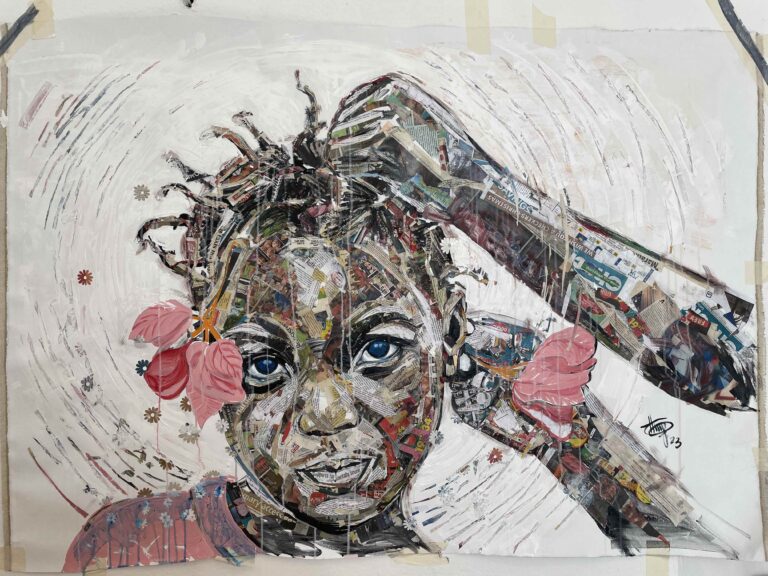
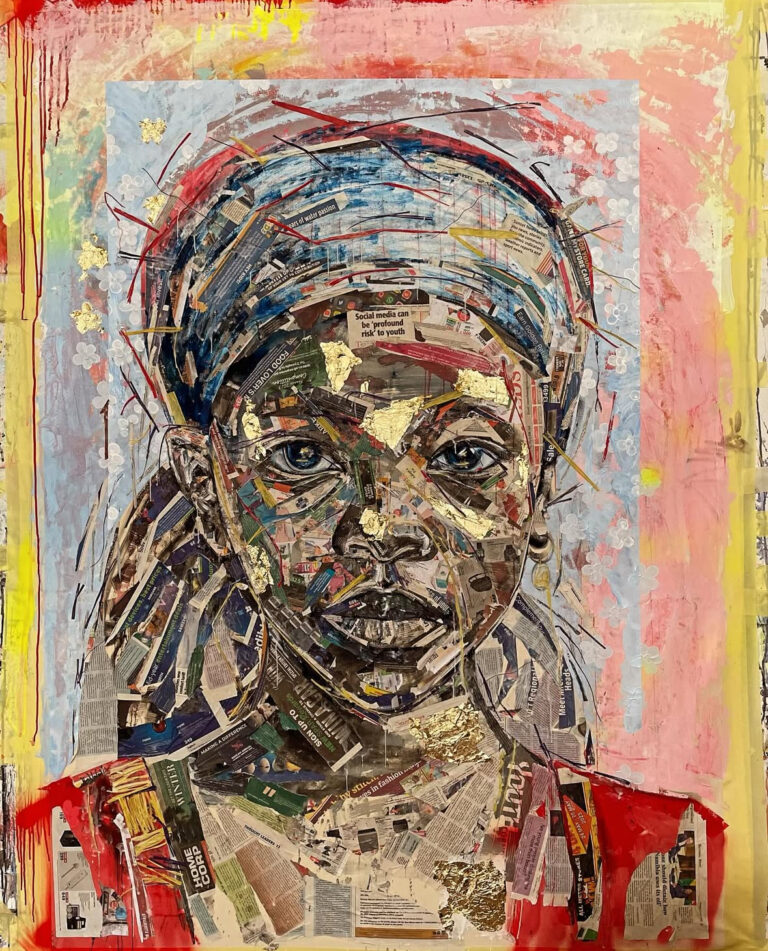
Hage Mukwendje (b. 1990, Namibia) is a visual artist based in Windhoek, working primarily with painting and mixed media. His practice combines acrylic, collage, and found materials to explore the complexity of human experience, memory, and identity. Raised in northern Namibia, his art is deeply rooted in the storytelling traditions of his hometown, Okalongo. His colour blindness led him early on to focus on contrast, texture, and depth, elements that have become central to his artistic language.
Hage studied at the College of the Arts in Windhoek and has exhibited widely across Africa and Europe. His most recent solo exhibition is Common Sense Is Not Common (Young Blood Art Gallery, Cape Town, 2025). His work is included in international collections, including those of the World Health Organization (Switzerland) and the Ministry of Science, Research and the Arts Baden-Württemberg (Stuttgart, Germany). He has also participated in several international artist residencies, notably at Akademie Schloss Solitude (Germany).
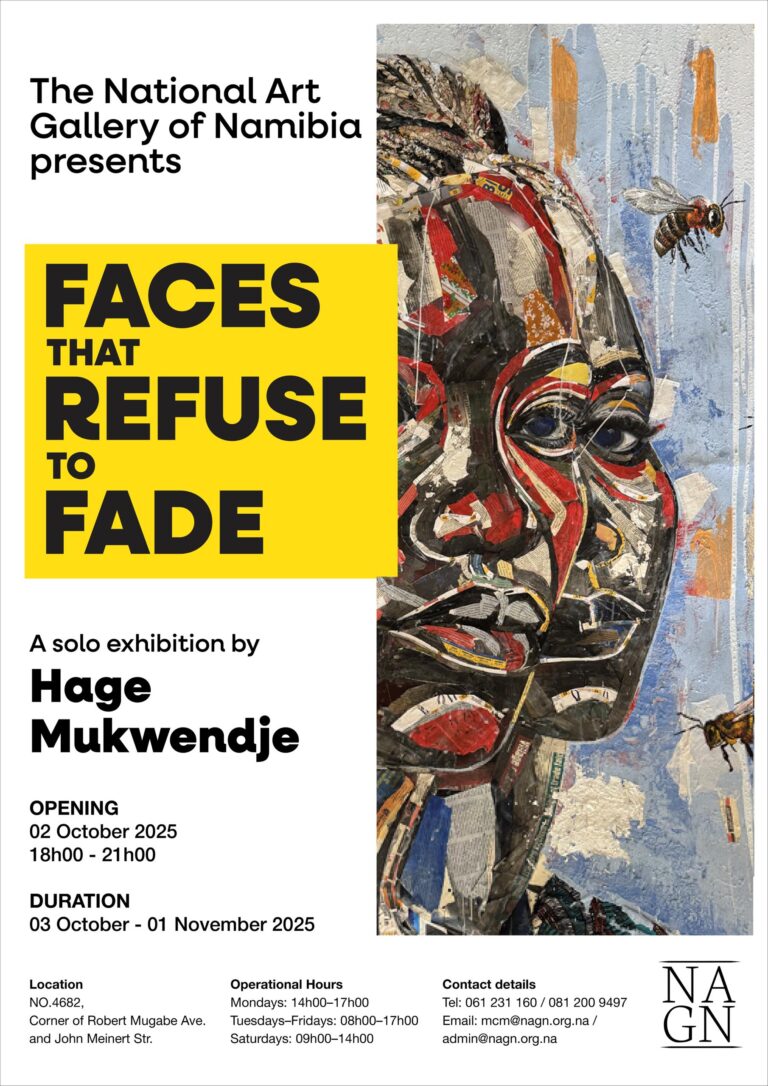
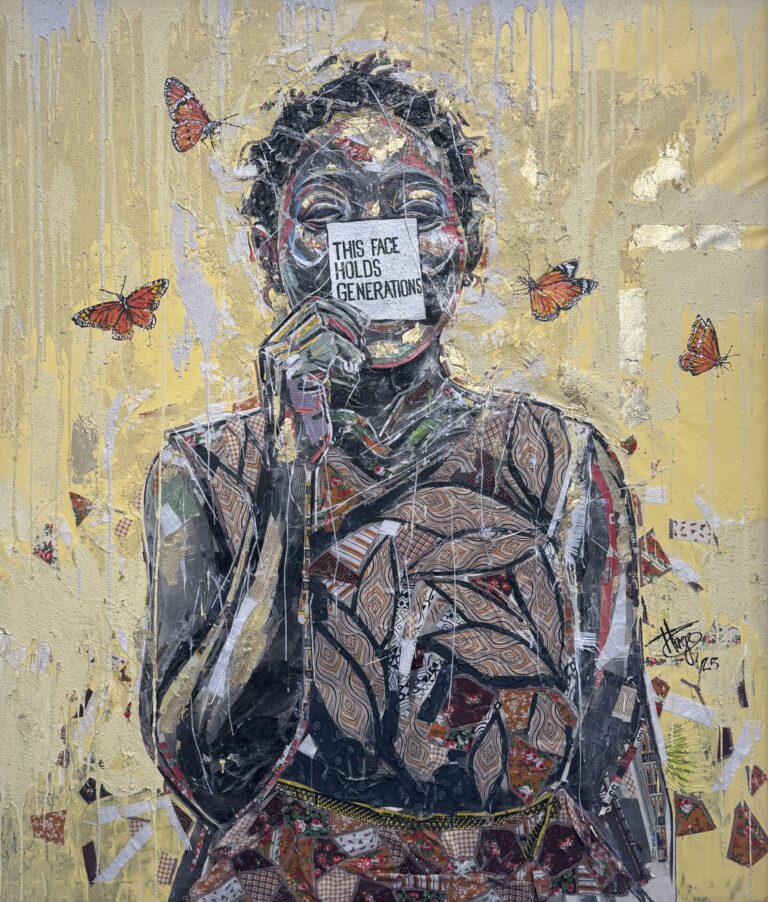
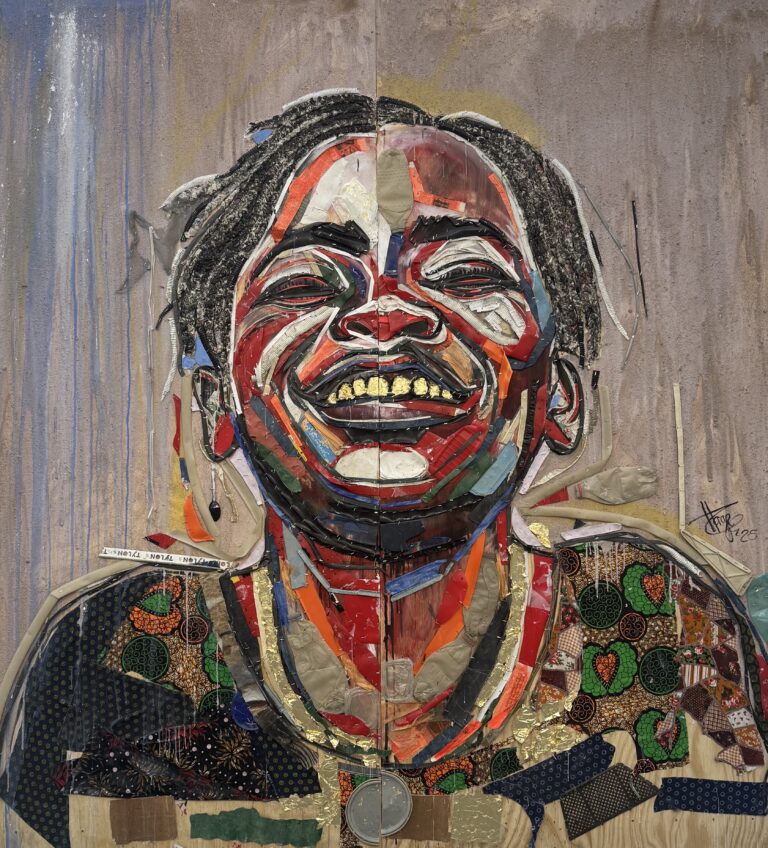
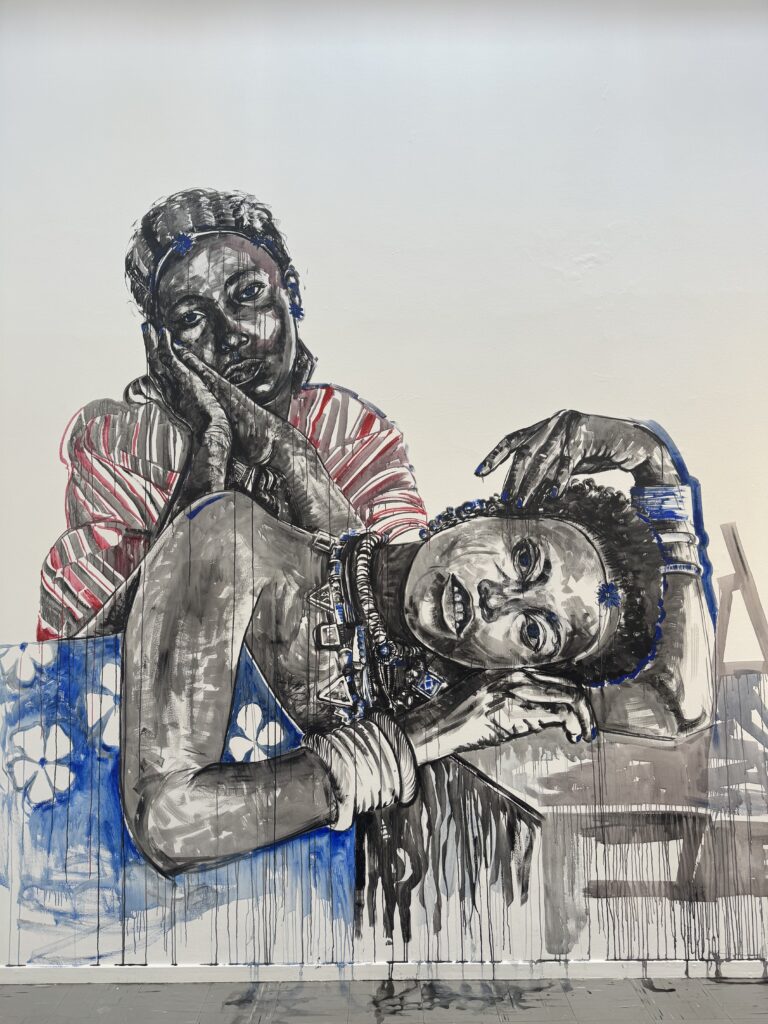
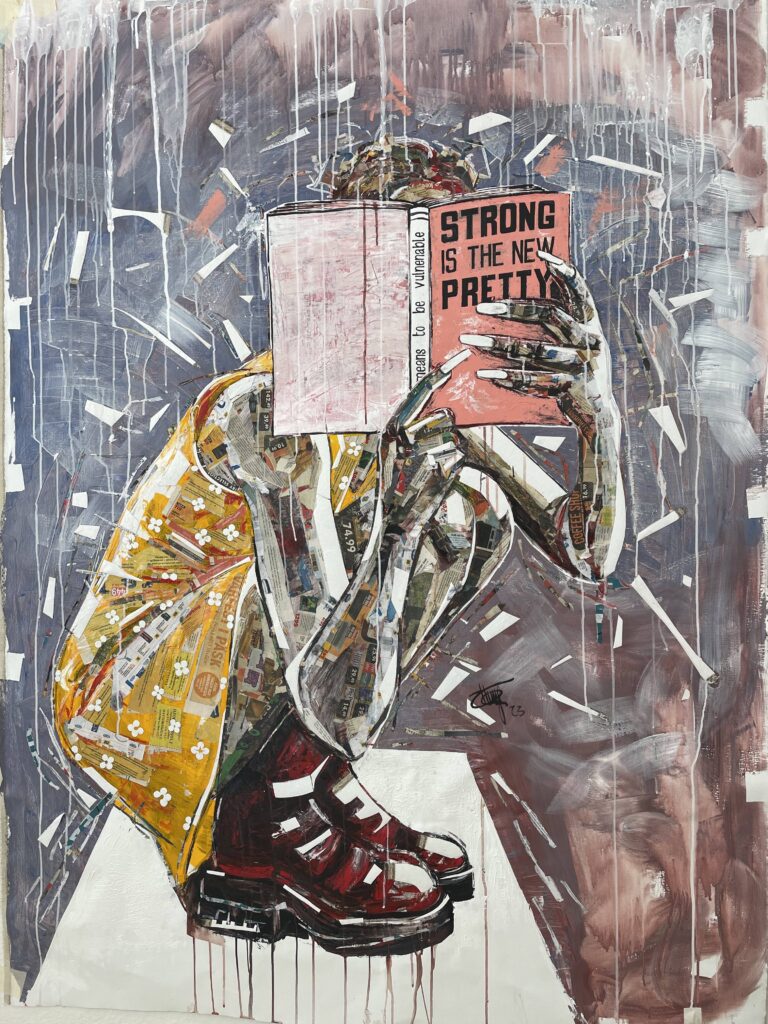
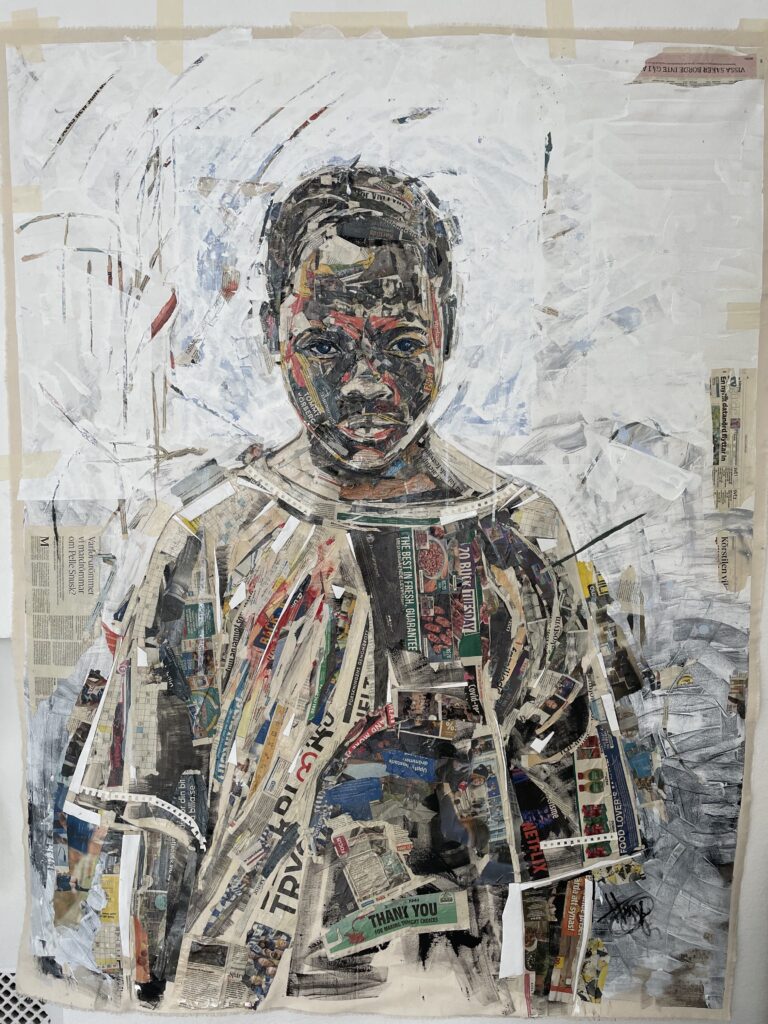
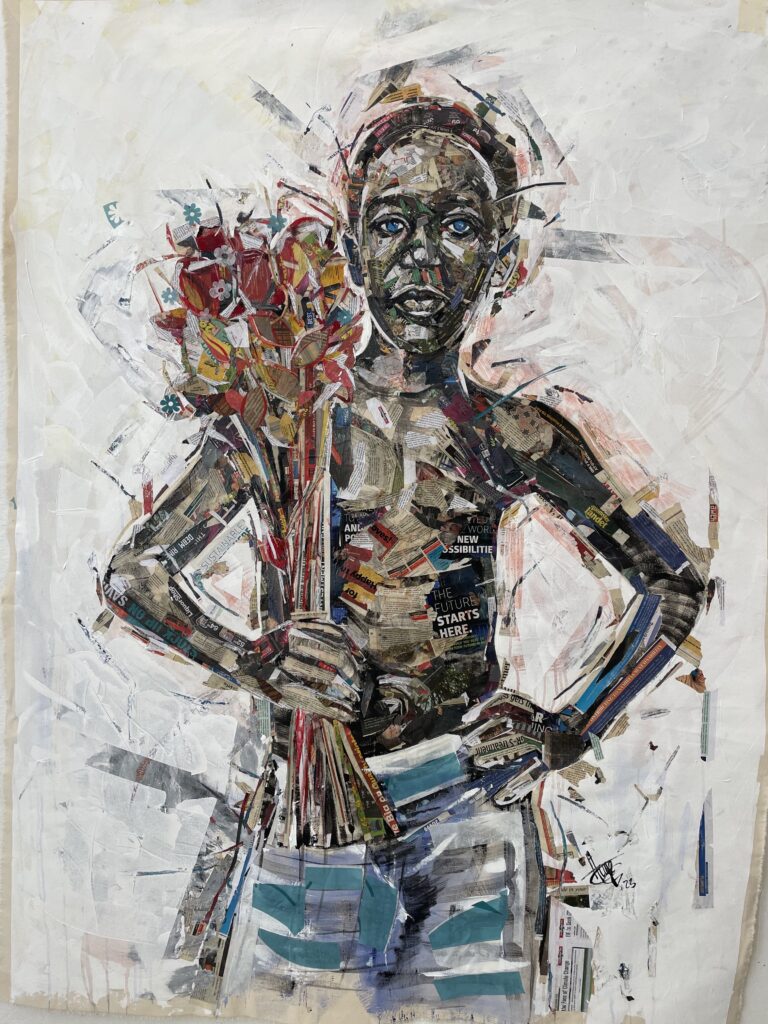
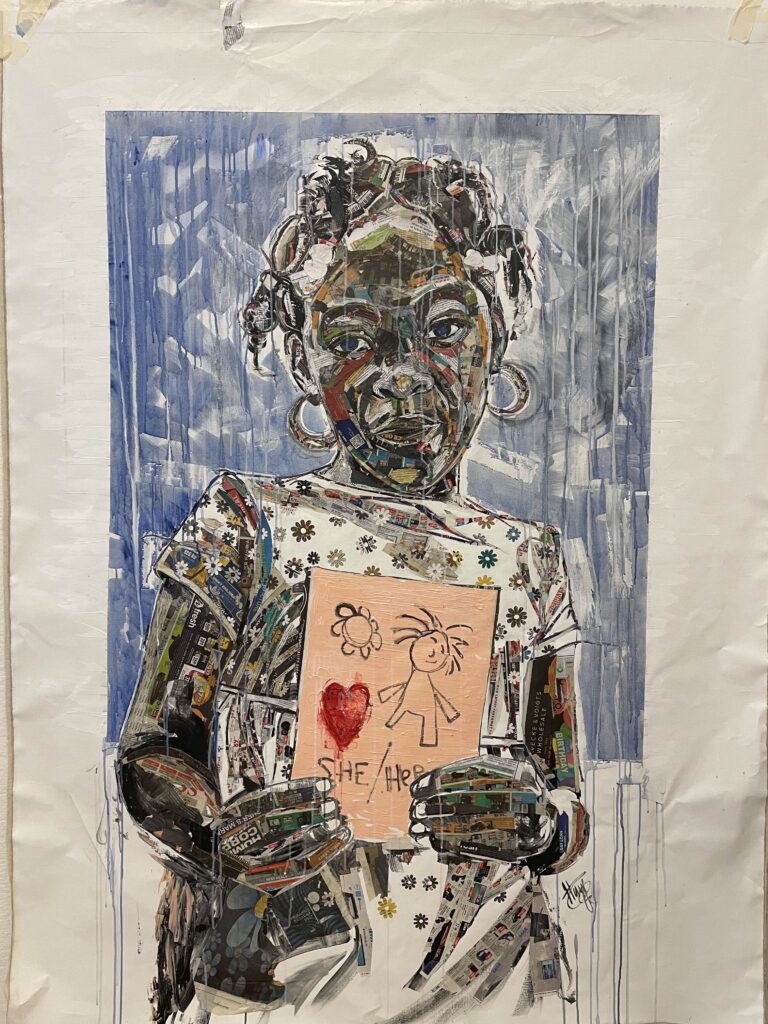
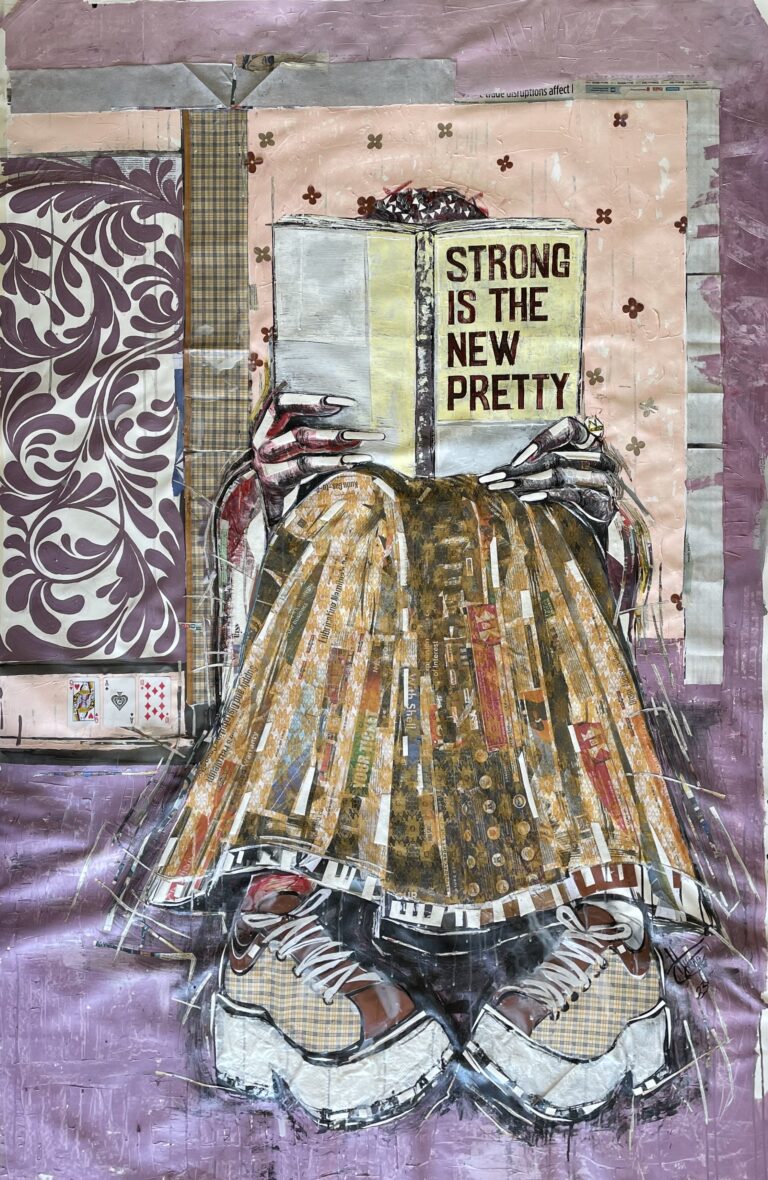
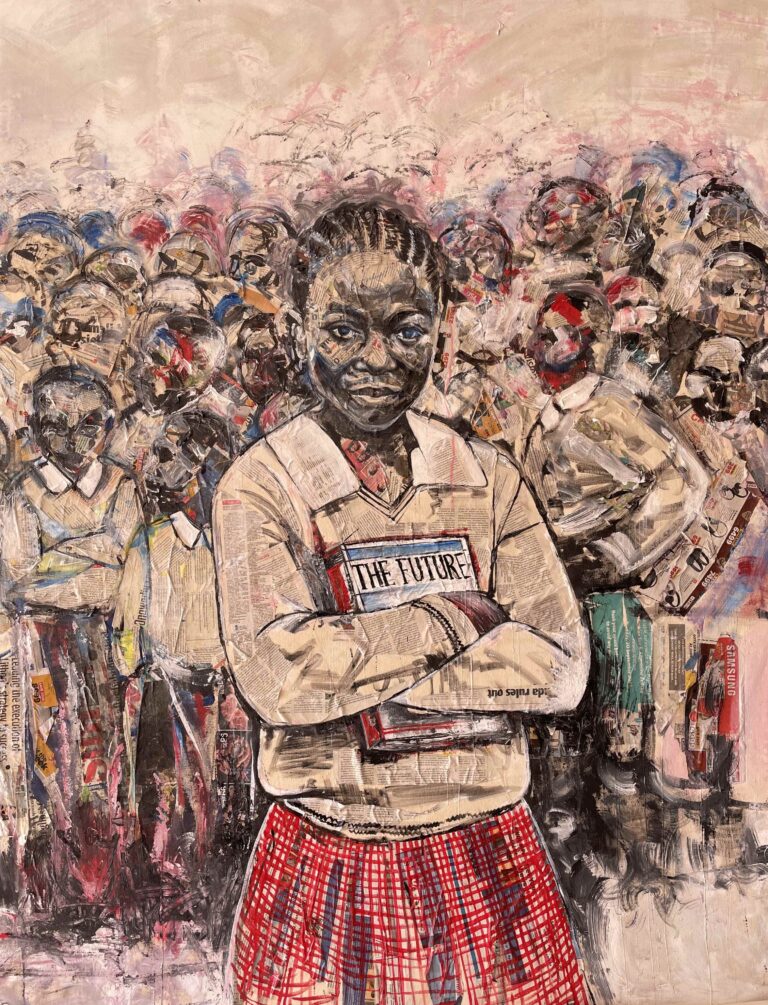
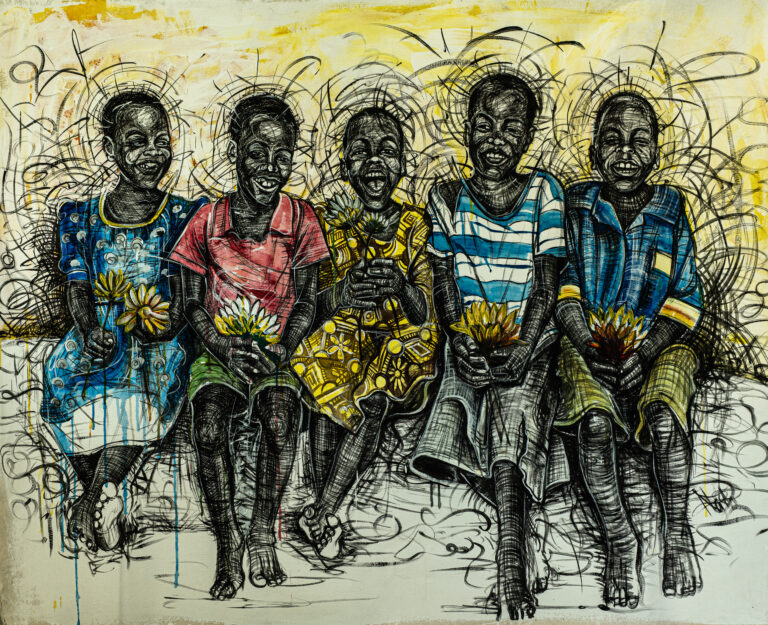
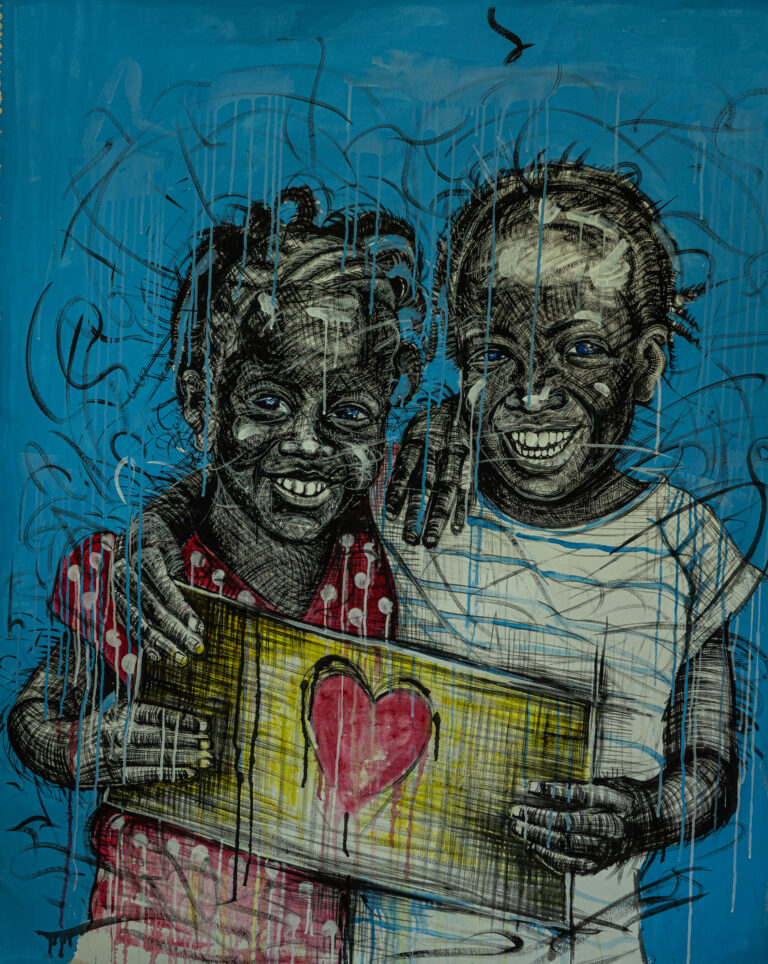
Mukwendje’s art is a continuous exploration of memory, land, and history. In Faces That Refuse to Fade, he tries to challenge dominant narratives by using beauty as an invitation: a way to open dialogue while preserving complexity and resisting erasure.
For the artist beauty is never superficial, it is something deeply embedded in us that manifests in many different forms: it is political, relational, and active, a force that arises from collective memory, ethical commitment, and the act of making space for others, it is an act of resistance.
In an era when images circulate frenetically and lose their symbolic weight, Mukwendje proposes a form of beauty that resists oblivion, rooted in memory and carrying non-negotiable stories, where tenderness becomes resistance.
His colour-blindness, which sets his gaze apart from the norm, has given rise to an aesthetic beyond the ordinary. What could have been a limitation has instead become the tool through which he subverts dominant visual codes, compelling the viewer to look again, with different eyes. It is a beauty that creates slowed-down spaces of empathy, urging us to pause, notice the details, and experience the image rather than consume it.
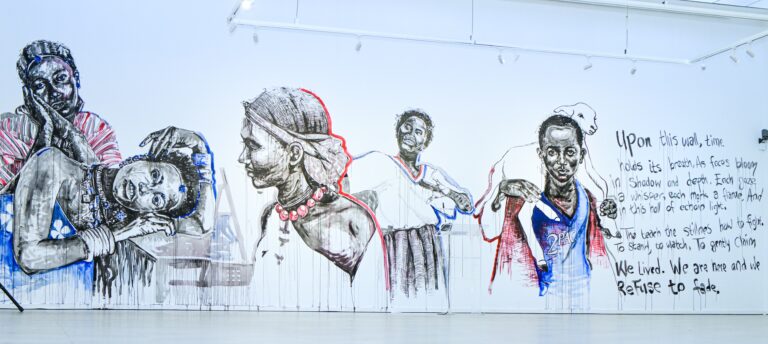
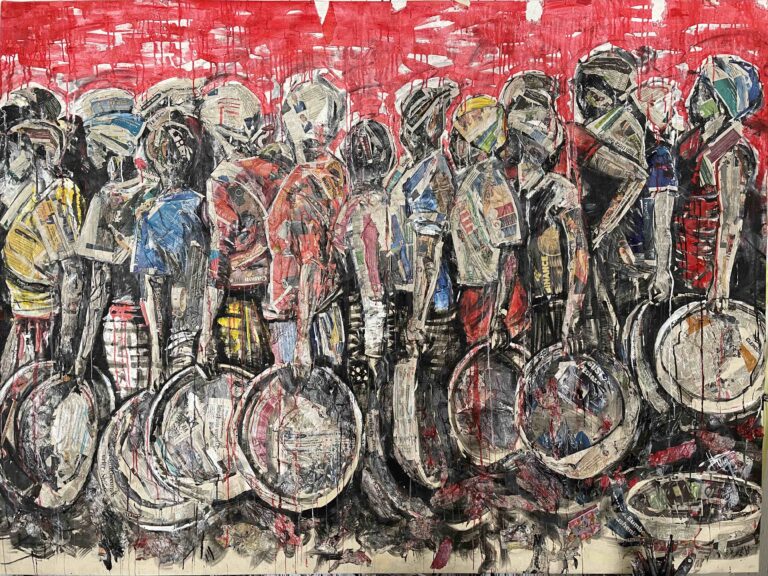
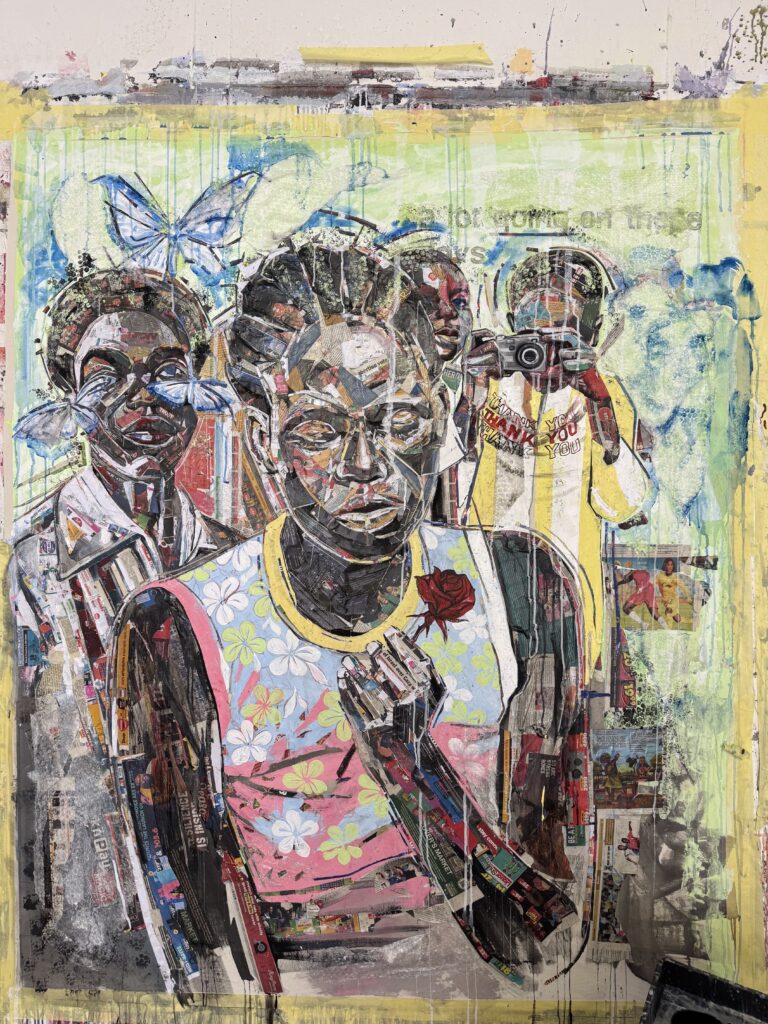
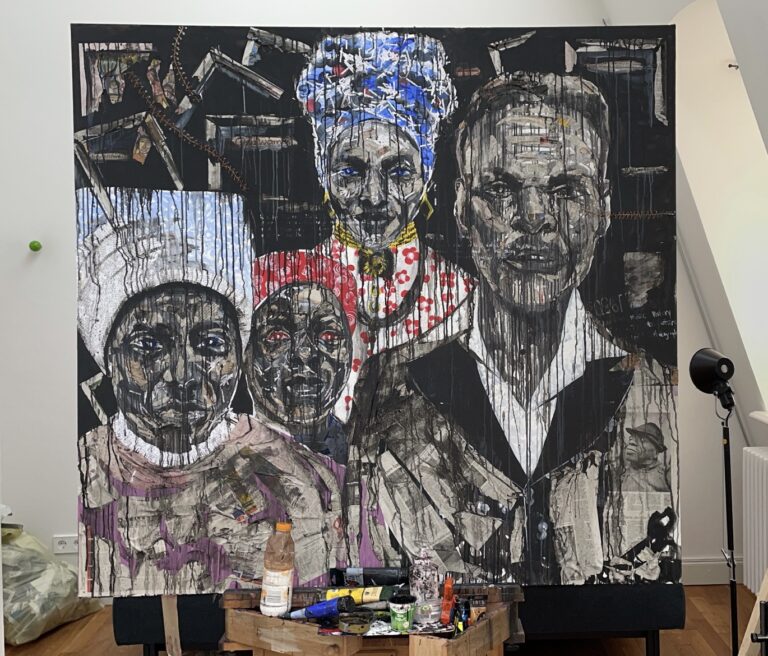
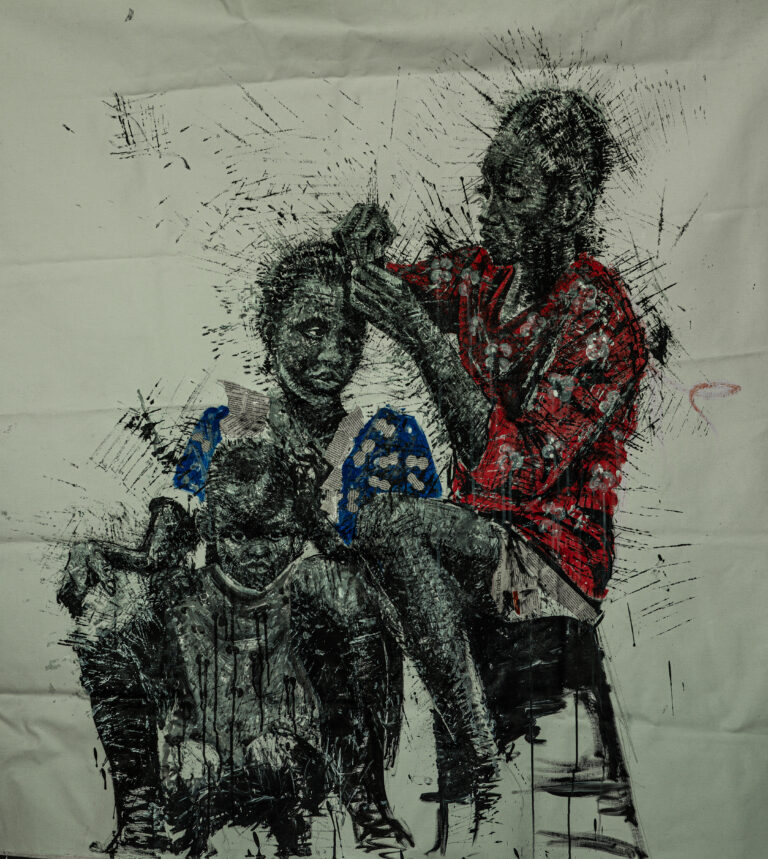
Faces That Refuse to Fade is a meditation on presence. Mukwendje pays tribute to those who, despite attempts to erase them, continue to exist: ancestors, workers, mothers, and children. The faces one encounters look at the viewer not as passive images, but as witnesses; they possess a beauty that does not reside in perfection, but lives in the eyes of those who have seen too much and continue to meet our gaze.
Portraits of the Presence
The human figure remains central, but each work shows a different way of approaching presence.
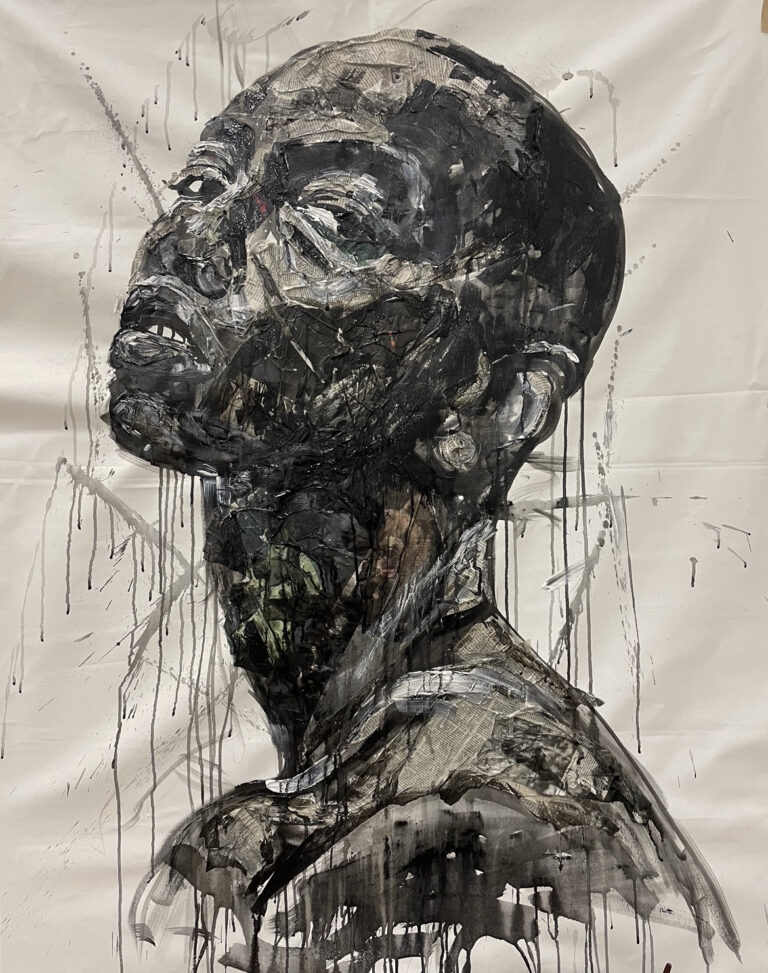
Some figures appear intimate and quiet; others are more direct, layered, or fragmented. Together, they show how Mukwendje uses portraiture not only to represent people, but to hold their emotional and symbolic weight.
The portraits create a dialogue between individual faces and collective experience. They speak of dignity, vulnerability, strength, and the need to be seen beyond stereotypes or simplified narratives.
Sounds of Origin
Developed during Hage Mukwendje’s residency at Akademie Schloss Solitude, Sounds of Origin engages with the colonial heritage linking Namibia and Germany. The work reflects on how histories of colonial violence are preserved, displaced, and remembered through archives, sound recordings, photographs, articles, and fragmented traces.
Rather than treating the archive as a neutral record, Mukwendje approaches it as a contested space, where silence and absence speak as strongly as what has been documented. The project reflects on the afterlives of German colonial rule in Namibia, including the long shadow of the 1904–1908 genocide of the Ovaherero and Nama.
In this work, sound becomes a metaphor for what still resonates across generations: interrupted voices, inherited memory, and histories that continue to demand recognition.
Evolution of Practice
Early works show the foundations of his approach: strong figures, expressive surfaces, and an interest in storytelling. Over time, the practice becomes more layered, both materially and conceptually. Collage, found materials, texture, and symbolic composition become increasingly central.
Seen together, these works show an artist constantly expanding his vocabulary while remaining connected to the same core questions: how images carry memory, how materials speak, and how art can make visible what might otherwise be forgotten.
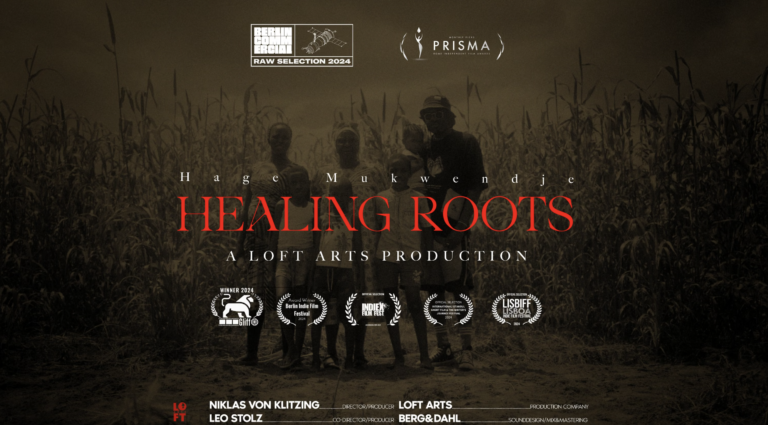
Healing Roots Documentary
A visually rich short documentary by Loft Arts that follows renowned Namibian visual artist Hage Mukwendje on a deeply personal journey through art, identity and cultural memory. Moving between the rural landscapes of Okalongo and the urban realities of Windhoek and Katutura, the film explores how Mukwendje’s work reflects the complexities of being African, Namibian and Ovambo in a rapidly changing world. Through intimate storytelling and striking imagery, “Healing Roots” portrays art not merely as creative expression, but as a form of healing, self-discovery and social reflection rooted in Namibian experience.